Introduction
As mentioned in part 1 of the lemon soda saga, I intended to create a sort of classic variety of the hard lemon soda. You can read that nonsense first if you wish for context. This post I’ll just be talking about what I did. What prompted me to do this now was that my lemon trees were finally full of ripe lemons. So it was as good a day as any.
This recipe should land up in the 4-5% ABV range.
Recipe
The recipe I used was as follows:
- 7 medium sized lemons
- 415g of white sugar
- Around 4.5 - 4.75l of water
- Around 1 tbsp of yeast
Equipment
- 5l water bottle. I wanted to use glass but didn’t get around to getting something.
- A funnel
- A hydrometer to measure the specific gravity of the liquid and calculate the ABV.
- Some mixing bowls which made it easier to process everything.
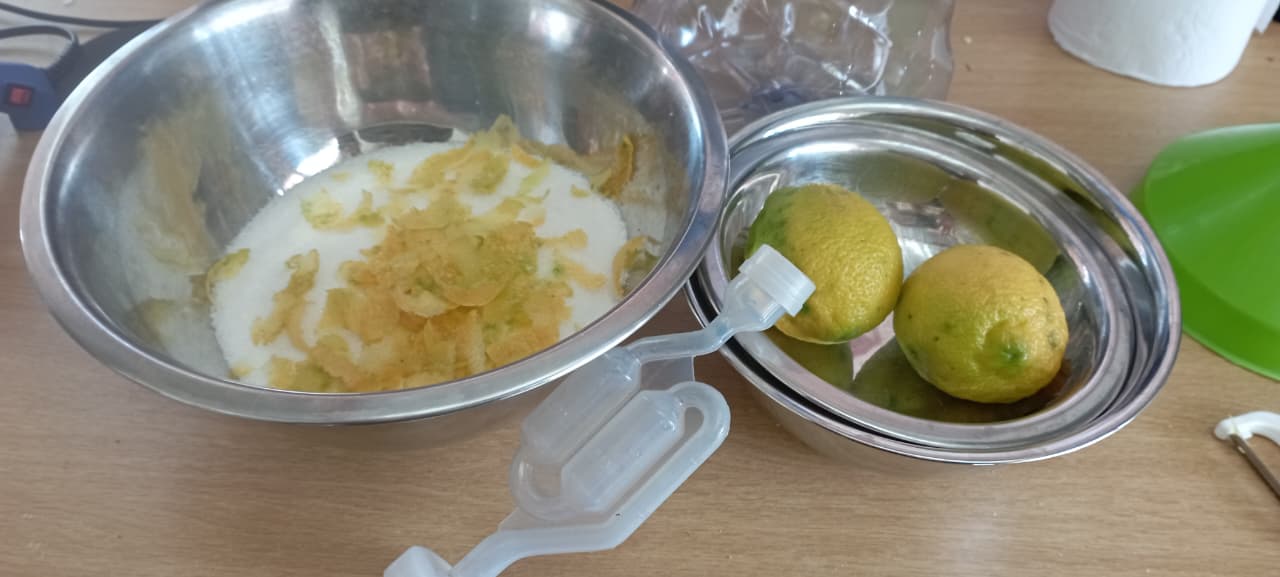
- An airlock
Process
- Weigh out the sugar and add it to a bowl.
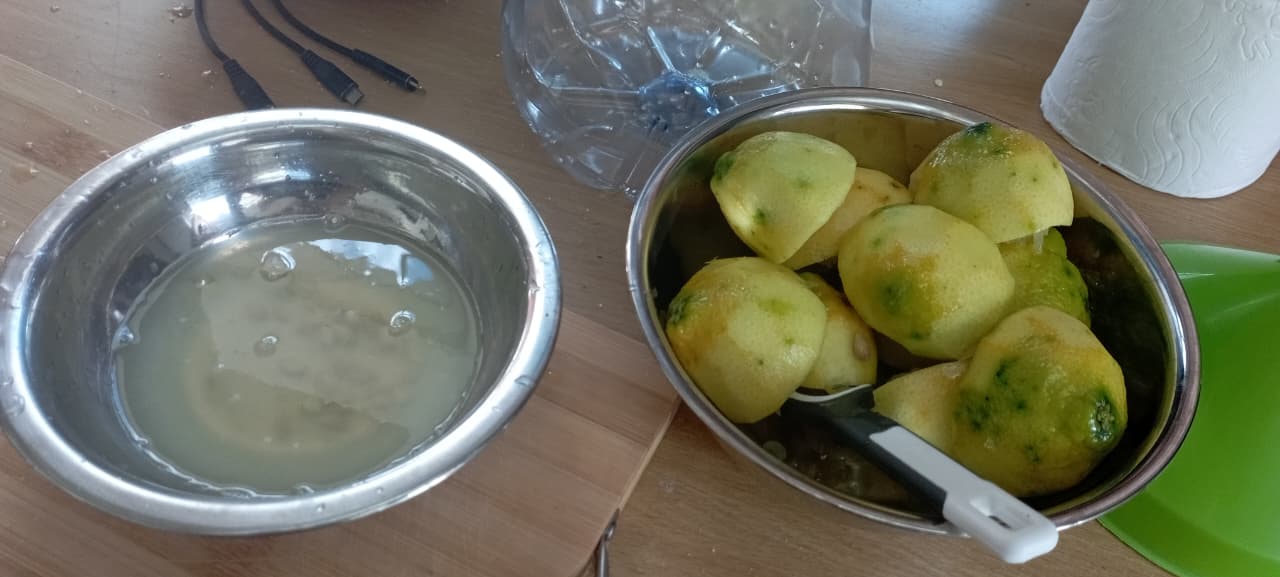
- Zest the lemons and mix the zest with the sugar. This is to extract the oils from the lemon rind and infuse the sugar with that flavour. I also then mashed the zest and sugar together to try to break down the rind a bit. By the end the sugar smelled amazing.
- Squeeze the juice from the lemons and add it to your fermenting vessel.
- Then get the sugar and zest mix into the fermenting vessel. I found it easier to chuck it into a funnel and add some water to help it go in.
- Add the rest of your water to the vessel.
- Shake the shit out of the fermenter to get all the sugar dissolved. Or don’t, I’m sure it would dissolve the same with patience.
- Use the hydrometer to take a reading of your brew and write that down.
- Pitch the yeast into the bottle and shake it once more.
- Then just pop your airlock onto the lid or however you want to manage it and leave it in a cool dark spot.
There is a lot of nuance to brewing I’ve very specifically left out here. Some people will ‘bloom’ the yeast beforehand to get it active and what not. Or you could use hot water to dissolve the sugar faster. Or you could add yeast nutrient.
Much of this I didn’t do because this is basically prison hooch. It shouldn’t need babying. I would actually recommend some form of yeast nutrient. But in my case I assume the lemon rind/zest will provide more than enough nitrogen for only a 5l batch.
The hydrometer reading is primarily for later. When the fermentation stops you can take another reading and compare the change and then calculate the ABV of the beverage.
Stay tuned for the outcome.